How to make a candle last longer, and why it burns faster than the label says
What a candle's stated burn time assumes, why yours burns faster, seven habits that stretch a jar, the warmer trade-off, and when to stop and save the jar.
The short answer
Burn in sessions of up to about four hours, trim the wick to 1/4 inch every time, keep the candle out of drafts, and let each burn reach the edge so no wax goes to waste. That's what stated burn times assume, and all-day burns, long wicks and moving air are what make a candle disappear early.
On this page 7 sections
Here's a puzzle from our own database. Voluspa rates its 12-ounce 3-wick tin for about 40 hours, and its 9-ounce single-wick Classic, with less wax, for about 60. Neither number is wrong. Three flames go through wax far faster than one: the tin trades hours for a quicker, bigger scent. Once you know what a burn time assumes, it's easy to get close to it, and easy to see where the hours go.
What the burn time on the label assumes
Brands work out burn time in tidy conditions: a trimmed wick, burns of a few hours at a time, no drafts, wax burned down to the last half inch. It's a fair way to compare candles, but almost nobody burns that way by accident. Here's how stated burn time moves with format across the brands we cover:
| Candle | Wax | Stated burn time |
|---|---|---|
| Voluspa Mini Tin, 1 wick | 4 oz | 25 hours |
| Voluspa Classic, 1 wick | 9 oz | 60 hours |
| Homesick Classic | 13.75 oz | 60 to 80 hours |
| Voluspa Large Jar, 1 wick | 18 oz | 100 hours |
| Voluspa 3-Wick Tin | 12 oz | 40 hours |
| Goose Creek 3-Wick | 14.5 oz | 45 hours |
| Voluspa 5-Wick Hearth | 123 oz | 250 hours |
The more wicks, the faster a candle uses its wax. Every candle page on our site lists stated burn time size by size, so you can weigh hours against scent before you buy; start from all candles or a brand.
Why your candle burns faster
- All-day burns. Heat builds up in the jar, the pool gets deep and the wax goes quickly. People who work from home and burn one candle eight hours a day report getting two or three days out of a 3-wick.
- A long wick. A bigger flame burns more wax, which is why trimmed candles keep winning the side-by-side comparisons people post.
- Drafts and fans. Moving air makes the flame lean and flare. Ceiling fans in warm climates are a common culprit.
- Neighbors. Candles clustered together heat each other. In one Hanukkah thread, the menorah candles flanked on both sides burned down first.
- Soft wax. Softer plant waxes melt and burn faster than harder blends, and a few longtime Bath & Body Works buyers are convinced newer candles go faster than the ones they bought years ago.
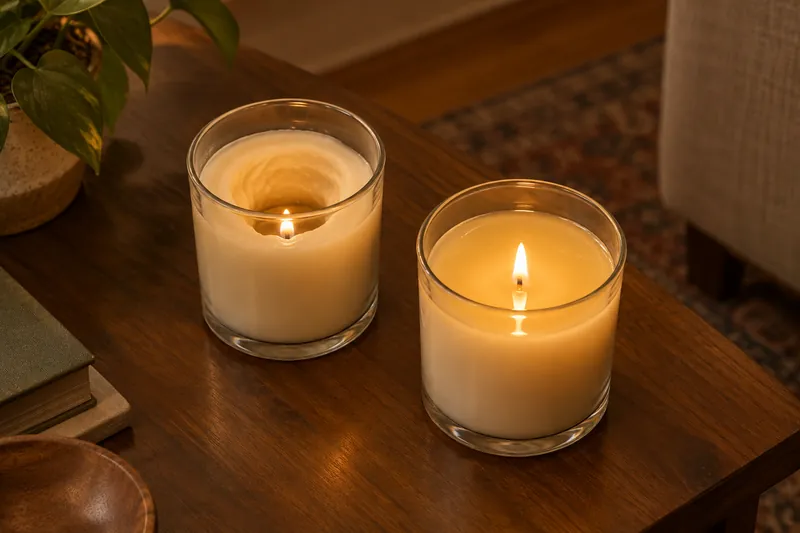
- Tunneling. Wax stranded on the walls never burns, so a tunneled candle ends early with a good part of it unused. Our tunneling guide has the fixes.
Seven habits that stretch a candle
- Trim to 1/4 inch before every burn. A smaller, steadier flame burns slower and soots less. Our wick guide has the details.
- Burn until the pool reaches the edge, then stop. That's usually 2 to 4 hours. Shorter loses wax to tunneling; much longer just burns it faster.
- Cap sessions at about four hours. If you want scent all day, rotate two candles instead of running one.
- Keep it out of moving air. Away from vents, fans and open windows.
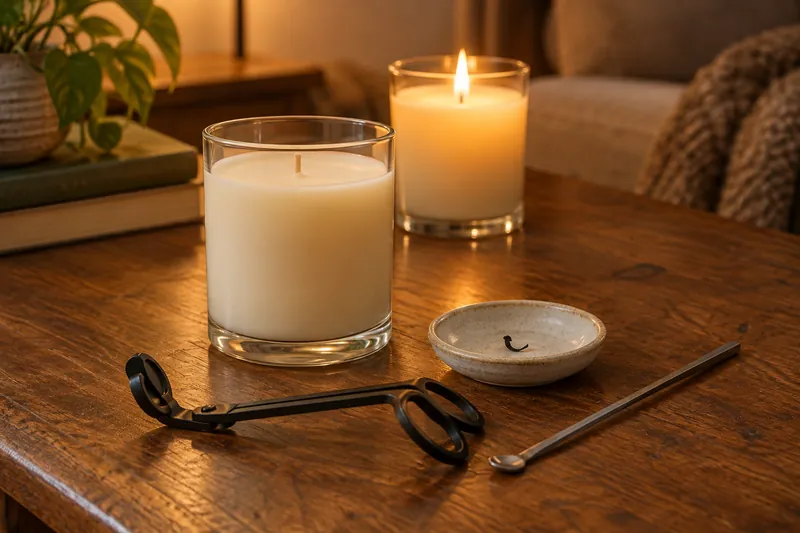
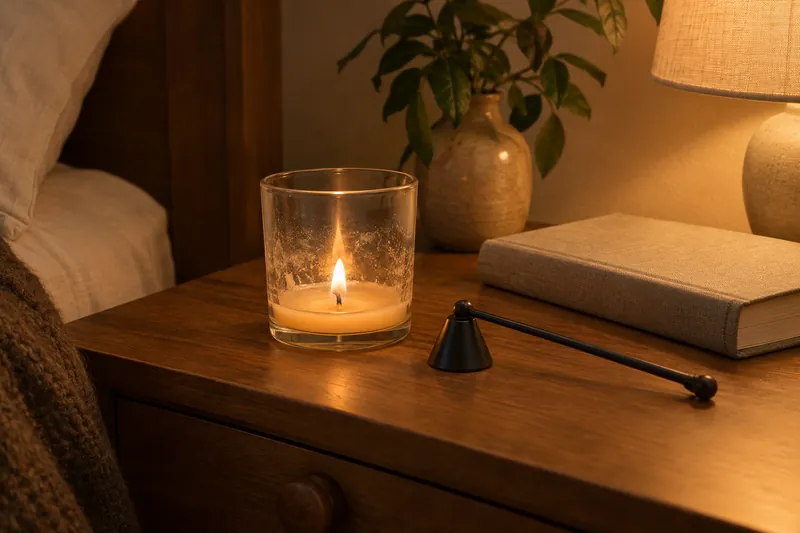
- Put it out with a wick dipper or a snuffer. No smoke, and a dipped wick relights cleanly.
- Put the lid back on once it's cool. It keeps dust off the wax and slows the fragrance fading.
- Store spares somewhere cool and dark. Wax doesn't expire, but scent fades faster in heat and sunlight.
Warmer or flame?
This is the great divide of every candle forum. Warmer lamps, which melt the wax from above with a bulb, make a candle last far longer, and their fans love the timer, the lack of soot and not worrying about the cat. One commenter guessed a lamp can stretch a candle to three times its life; another complained it now takes her forever to finish a big jar.
The trade-off is scent. A warmer reuses the same top layer, and once that layer has given up its fragrance you have to blot it off or burn it down to reach fresh wax. Plenty of people split the difference: they burn a candle normally while it's full, then move it to a warmer once the wick gets short or the jar is too low to light comfortably.
The candle “rules” you'll see online
Search for candle care and Google will ask whether you know the 3-hour rule, the 8:10 rule and the 84 rule. Here's what each actually means, plus two tips that refuse to die.
- The 3-hour rule gets used two ways: burn a new candle about three hours so it melts to the edge, and don't burn much longer than three or four hours at a stretch. Both are sound.
- The 4-hour rule is the cap printed on most candle labels. It keeps the wick from mushrooming, the pool from getting too deep and the glass from overheating.
- The 8:10 rule is about scent, not lifespan: one 8-ounce candle for every 10 feet of room. More in our throw guide.
- The 84 rule is advice for people starting a candle business (make 84 candles and give most of them away before selling). It has nothing to do with burning one.
- Freezing candles before you burn them is a durable internet tip with no real evidence behind it; even the people recommending it couldn't say how much longer theirs lasted.
- Salt, oregano and other sprinkles come from viral videos. Don't add anything to a lit candle's pool.
When to stop, and what to do with the jar
Stop when about half an inch of wax is left. Many people let the candle put itself out, and most jars get through it, but the bottom of the glass gets very hot at the end, and that's when people report cracked jars and marked tables. Whatever wax is left can finish its life on a warmer.
To get the leftover wax out, the freezer wins almost every thread: a few hours to overnight, and the wax shrinks enough to pop out in one piece with a butter knife. It works best on straight-sided jars, and people skip it for antique or thin glass. Pouring hot water in works too, since the wax floats up and sets in a disc, but several people have had jars crack when they used water straight off the boil. Everyone agrees on one thing: never microwave a candle jar, because most wick tabs are metal. A little cooking oil or dish soap takes off the last waxy film.
Then the fun part. Candle jars become pen cups, makeup brush holders, cotton ball jars and succulent pots. Some small makers take jars back for a discount, local Buy Nothing groups snap them up, and clean glass can go in the recycling. Voluspa fans are especially attached to their embossed jars, which turn up as vases and pen cups in our Goji Tarocco Orange review.
Questions people ask
How long should a candle last?
Check its stated burn time: about 25 hours for a 4-ounce tin, 40 to 60 for a classic single-wick jar, around 40 to 45 for a 3-wick and 80 to 100 for a large jar, depending on the brand. Trimmed wicks and burns of a few hours get you close.
Do candles expire?
The wax doesn't, but the fragrance fades over time, faster with the lid off or in a warm, sunny spot. An old candle still burns; it just smells softer.
Does putting a candle in the freezer make it last longer?
There's no good evidence for it. The freezer is useful for something else: popping leftover wax out of an empty jar.
Why is my candle burning so fast?
Usually a long wick, a draft, very long burns or other candles heating it. Trim to 1/4 inch, move it out of moving air and keep sessions to about four hours.
Do candle warmers make candles last longer?
Yes, much longer, since there's no wick burning the wax away. The trade-off is that the top layer runs out of scent and has to be blotted off, and some candles smell better on a flame.
Spotted something we got wrong? Tell us.