Why can't I smell my candle? Nose blindness, room size and the candles that throw
Why a candle that smells great in the jar goes quiet once it's lit, and what helps: your nose, the room, the air and the candle itself, in that order.
The short answer
Most of the time it's your nose: sit with a steady scent and your brain starts tuning it out, which is why the room smells wonderful when you walk back in. If nobody else can smell it either, the candle is too small for the room, it hasn't reached a full melt pool yet, or it's simply a soft thrower.

On this page 6 sections
You light the candle, the room fills with it, you settle in, and twenty minutes later it's gone. Step out to grab the mail, come back, and there it is again. It's one of the most common posts in every candle community we read, and more often than not the candle is doing its job.
First, your nose
Smell adapts fast. Your nose keeps picking up a steady scent, but your brain files it as background and turns the volume down, the same reason you stop smelling your own perfume or your own house. People who burn candles every evening have a whole toolkit for it:
- Leave and come back. A minute outside the room resets things, at least for a while.
- Burn it in the next room. A favorite trick: light the candle in the kitchen and sit in the living room, so you catch it in drifts as you move around instead of sitting in it.
- Keep sessions shorter. Some people put a candle out once the pool reaches the edge and relight it later, rather than running one candle all evening.
- Rotate scents, and take a night off. A summer of the same tomato or vanilla candle makes it harder to notice; people who fade out quickly swear by a scent-free evening now and then.
If the people around you can smell it and you can't, this is almost certainly the answer. If nobody can, read on.
Then, the room
A single-wick jar that fills a bedroom can disappear in an open-plan living room, and no candle fills a space it isn't sized for. A home fragrance founder in one luxury candle thread put it simply: the wider the candle, the wider the melt pool, the stronger the throw. That's why people with big rooms buy 3-wick candles and hearths, and why one scent can be a powerhouse in one format and a whisper in another.
| Space | What people who get it right use |
|---|---|
| Bathroom or powder room | A mini or a small single wick, door closed. Small rooms hold scent, so even a soft candle works. |
| Bedroom or office | A classic single-wick jar, around 8 to 10 oz. |
| Living room | A 3-wick candle, or two single wicks on opposite sides of the room. |
| Open plan, high ceilings | A hearth, a few candles spread out, or a candle plus a reed diffuser. One jar rarely reaches the second floor. |
Designers quote an “8:10 rule” for this: one 8-ounce candle for roughly every 10 feet of room. It's a rule of thumb, not physics, but it explains why one jar can't scent a great room. Our reviews show the same thing. Voluspa's single-wick jars draw most of the brand's throw complaints while its 3-wick tins win praise, as our Baltic Amber and Goji Tarocco Orange reviews lay out.
Then, the air
Hot air rises, and scent rides it. A candle on a low coffee table spreads through the room you're sitting in, while one on a high shelf sends much of its fragrance to the ceiling. Moving air matters even more: one buyer spent weeks disappointed in a candle before noticing it sat right next to her air purifier, which was doing its job. Vents, ceiling fans and dehumidifiers do the same.
Open windows are the one real disagreement. Closing up a small room concentrates the scent, and people swear by shutting the bathroom door. Across a whole house, others find a gentle cross-breeze or a small fan on the far side of the room carries a candle further. Houses behave differently, so try both.
And finally, the candle
Some candles are just quiet, and that isn't on you. A few things decide how loud one is:
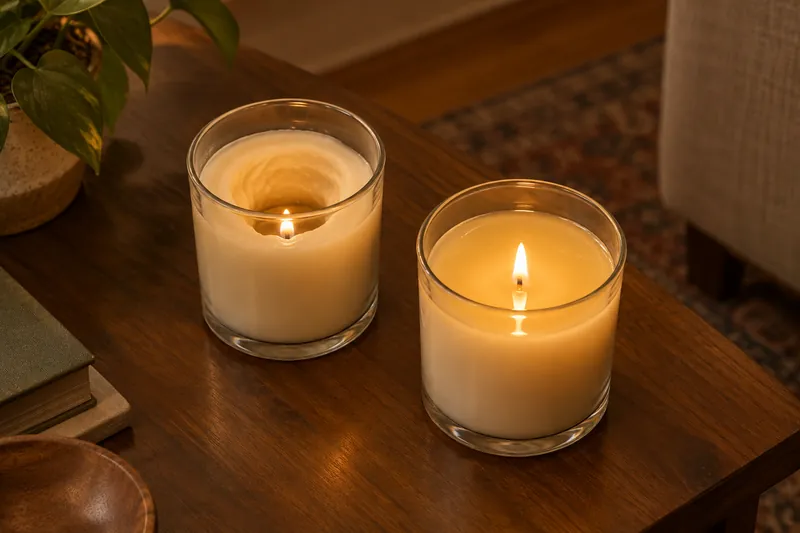
- The melt pool. Most of the scent comes off the liquid wax, so a candle smells weakest in its first half hour and once it has tunneled. Let it reach the edge; if it never does, see our tunneling guide.
- The first few burns. Some candles take a few full burns to open up, and a handful of owners say theirs only woke up halfway down the jar, which is what one blogger found with Voluspa's Mokara.
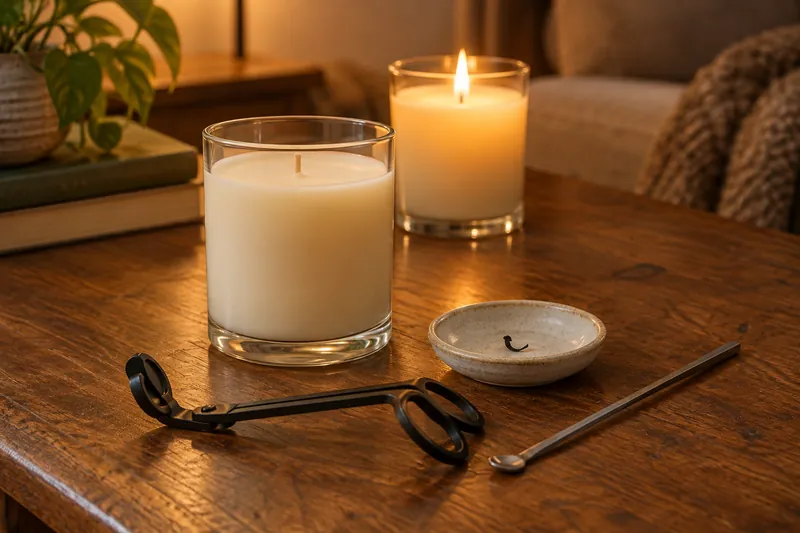
- The wick. A wick trimmed too short makes a small, cool flame and a small pool; a mushroomed one smokes. Both mute the scent, and our wick guide has the fixes.
- The scent itself. In the threads we read, the “strongest throw” lists lean on sweet gourmands, big florals and loud citrus, while soft ambers, musks and airy green scents turn up more often in the “I can't smell it” posts. If you want a loud one, start with gourmand, floral or citrus.
- Cold throw versus hot throw. How a candle smells in the jar says little about how it smells lit. Plenty of candles smell incredible with the lid off and then turn polite once burning.
- Age. Wax doesn't go off, but fragrance fades, faster with the lid off or on a warm, sunny shelf. A candle that sat in the sun for a year may simply have less to give.
What about candle warmers?
Warmer lamps are the fix people suggest most for weak throw, and many swear a candle smells stronger on a lamp than it ever did lit. The catch is that a warmer melts the same top layer over and over, so that layer runs out of scent and has to be blotted off or burned down before fresh wax takes over. Flame loyalists add that some candles throw better lit. Still, if a candle you love is quiet on the flame, a warmer is worth trying before you give up on it: one longtime Voluspa fan keeps a Silver Birch Peppercorn on one and smells it through the whole house.
If a candle still won't throw
Check these four things. If all of them are true, it's a soft thrower: move it to a smaller room, and choose a wider, multi-wick format next time.
- It reached a full melt pool, and the wick is trimmed to about 1/4 inch.
- It's sized for the room (see the table above).
- It sits low, away from purifiers, vents and fans.
- Someone who just walked in can't smell it either.
Questions people ask
Why can I smell my candle before I light it but not after?
Cold throw and hot throw are different things: the fragrance that drifts off solid wax doesn't always carry once the candle is lit. Give it a full melt pool and a trimmed wick, and if it's still quiet, it's a candle that smells better cold.
Why can other people smell my candle when I can't?
Nose blindness. Your brain tunes out a steady scent after a while in the same room. Step out and come back, burn it in the next room, or rotate scents.
Do 3-wick candles throw more?
Usually. More flames make a wide melt pool faster, and a wider pool releases more fragrance, which is why people with big rooms prefer them. They also go through their wax faster.
Do candles lose their scent over time?
The wax doesn't go bad, but the fragrance slowly fades, especially with the lid off or in a warm, sunny spot. Store candles with the lid on somewhere cool and dark.
Where should I put a candle to smell it most?
Low, in the room where you spend time but not right beside you, and away from vents, fans and air purifiers. In a small room, close the door.
Spotted something we got wrong? Tell us.