How to trim a candle wick, and what soot, mushrooms and tall flames mean
How short to trim a candle wick, the tools people actually use, the first-burn debate, and a flame chart for soot, mushrooming, flicker and drowning wicks.
The short answer
Trim the wick to about 1/4 inch before every burn once the candle has been lit, cutting it cold and lifting the trimmings out of the wax. Most smoke, soot, sparks and tall flames come from a wick left too long or a candle sitting in a draft.
On this page 6 sections
If candle people agree on one habit, it's this one. The most upvoted reply in a Reddit thread about wick trimmers came from someone who doubted the advice, burned two identical candles side by side and found the trimmed one lasted noticeably longer. That's one person's experiment, but it matches what nearly every candle thread says: a trimmed wick burns calmer, cleaner and slower.
How to trim a wick
- Let the candle cool completely. Trimming a hot wick drops ash into liquid wax and makes it easy to cut too short.
- Cut to about 1/4 inch above the wax. Go to about 1/8 inch on a wood wick.
- Snip off the mushroom. That black, crumbly cap comes off even when the wick isn't long.
- Lift the trimmings out. Bits of carbon left in the wax are what make the next burn spit and smoke.
- Check again after about four hours of burning. Wicks lengthen as the candle burns down.
What to trim with
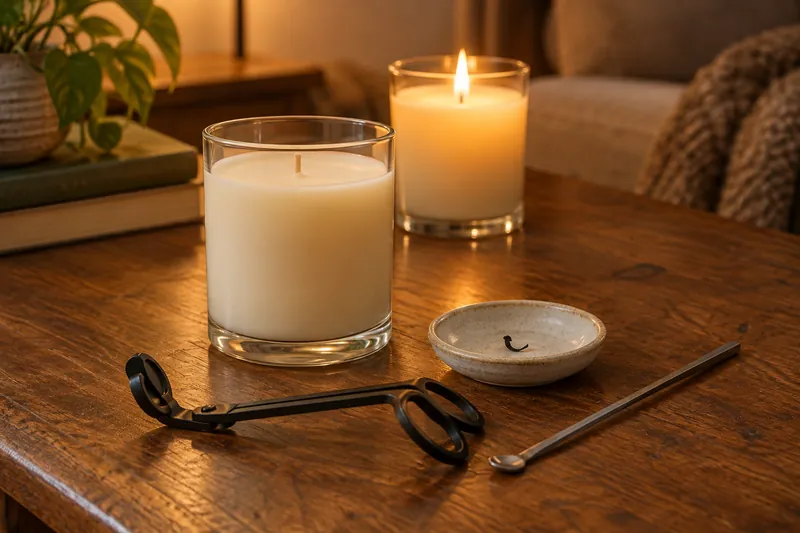
A wick trimmer is a pair of long, angled scissors with a little shelf that catches the cut end, and it earns its place once a candle is halfway down a deep jar, where scissors can't reach. Opinions on brands are all over the map: plenty of people love the Yankee Candle trimmer, some find a five-dollar no-name one sharper than a designer version, and a vocal crowd thinks the whole category is unnecessary.
The cult alternative is a pair of nail clippers kept just for candles. They cut cleanly and give fine control over length, and cat nail clippers and cuticle scissors have fans too. Ordinary scissors are fine for the first half of a jar, then get awkward. Some people pinch the crumbly cap off with their fingers once it's cool, which works on cotton wicks and nothing else.
Trim before the first burn?
People split almost evenly. Bath & Body Works regulars mostly leave fresh wicks alone and start trimming from the second burn, while candle-store staff tend to tell customers to trim from the start. The sensible middle: trim a brand-new wick only if it's clearly longer than 1/4 inch. On big multi-wick hearths and candles known for short wicks, leave it, since a flame that's too small can start a tunnel (more on that here).
What your flame is telling you
A healthy flame is calm and teardrop-shaped, about half an inch to an inch tall, over an upright wick and a clear pool. When it isn't, the cause is usually easy to read.
| What you see | Usual cause | What to do |
|---|---|---|
| A flame over an inch tall | A wick left too long, or one too big for the candle | Put it out, let it cool, trim to 1/4 inch. If it climbs again within the hour, the candle is overwicked. |
| Black smoke, soot on the glass | A long or mushroomed wick, a draft, or a flame short of air in a deep jar | Trim, move it away from vents and fans, and wipe the soot off the cool glass with a dry paper towel. |
| A mushroom on the wick | Carbon building up because the wick pulls more fuel than it can burn | Snip it off cold before relighting. A little is normal; a big cap every burn points to a wick that's too big. |
| Sparks, popping, black specks | Pieces of the carbon cap breaking off into the pool | Trim, and fish the debris out once the wax is cool. |
| Constant flicker | Moving air, or a long wick | Find the draft (a vent, a fan, an open door, even people walking past) and trim. |
| A tiny flame that drowns | A wick trimmed too short, or a tunnel flooding it | Blot some liquid wax with a paper towel and relight, then skip trimming for a few burns. |
| A wick leaning toward the glass | The wick drifted in soft wax, often after time on a warmer | While the wax is liquid, nudge it back to center with a wick dipper. A flame against the glass can scorch a label or crack the jar. |
| A wood wick that won't stay lit | Wick too long, or a pool that hasn't reached the edge | Trim to about 1/8 inch, light it along its base, and give it a full melt pool. |
If a candle smokes and soots however you trim it, its wick is too big for the jar, and only the maker can fix that. One blogger who burned Voluspa's Mokara saw soot on long burns and a mushrooming wick, while a reviewer of Silver Birch Peppercorn reported five- and six-hour burns with no soot and hardly any mushrooming, which is what a well-matched wick looks like. Soot is also what most worries about candles and your health come down to; our label guide covers that side.
How to put a candle out
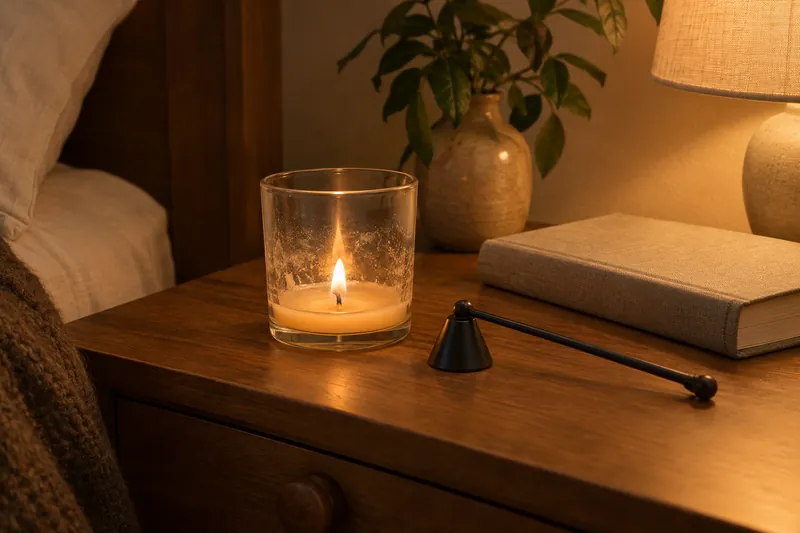
Blowing works, but it sends up a plume of smoke and can splash wax. Two better options have loyal followings. A wick dipper, a little hooked rod, lets you push the lit wick into the melted wax and straighten it back up: the flame goes out with no smoke, and the wick comes out coated and ready for next time. A snuffer, the little bell on a stick, smothers the flame with only a wisp. Putting the lid on works in a pinch, though it traps the smoke in the jar, and some people say that leaves soot on the glass.
Candles with crystals, flowers and wood
Candles topped with dried flowers, crystals, herbs or wooden ornaments are all over craft fairs and TikTok, and candle makers in the threads are united against them. Decorations can catch and flare, stones and glass hold heat and can crack a jar, and the clutter drowns wicks. Treat them as ornaments: pick everything out of the wax before lighting, or melt the candle on a warmer instead. When one Reddit poster's craft-fair candle refused to stay lit, the culprit turned out to be a wooden star that had already caught fire and flooded the wicks.
Questions people ask
Should you trim a candle wick before the first burn?
Only if it's clearly longer than 1/4 inch. Many people leave a new wick alone for the first burn and trim before every burn after that. On hearths and candles with short wicks, skip it.
What can I use instead of a wick trimmer?
Nail clippers are the favorite, and cuticle scissors or ordinary scissors work while the candle is still near the top. Whatever you use, cut the wick cold and lift the trimmings out of the wax.
Why does my candle leave black soot?
Usually a long or mushroomed wick, or a draft making the flame flicker. Trim to 1/4 inch and move it out of moving air. If it still soots, the wick is too big for the jar.
How do you trim a wood wick?
Shorter than cotton, to about 1/8 inch, breaking off the charred part once it's cool. A wood wick needs a full melt pool to stay lit, so give each burn time.
How tall should a candle flame be?
About half an inch to an inch for most jar candles. A taller flame, or one that keeps growing, needs a trim.
Spotted something we got wrong? Tell us.